
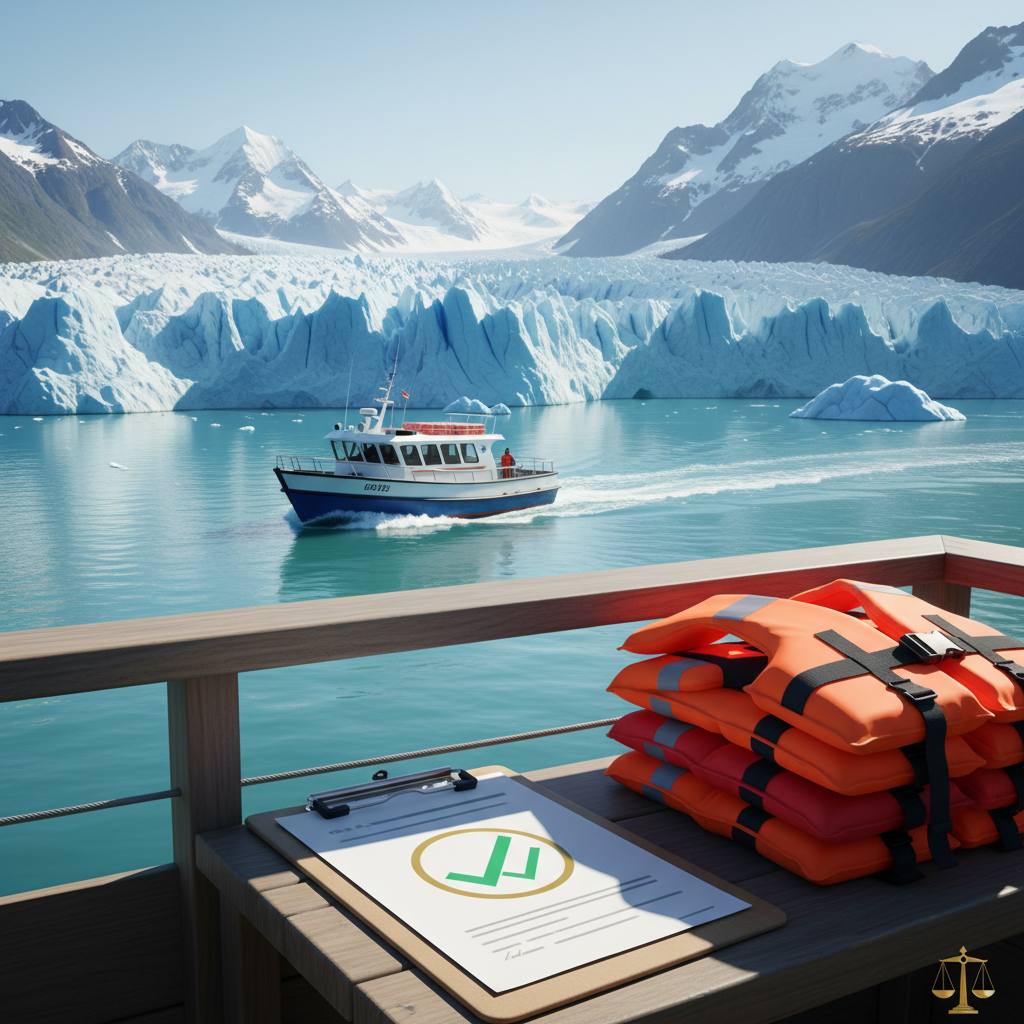


A lot of Alaska tours look identical at the dock: the same coolers, the same rain gear, the same confident promises. The separation only shows up when something goes sideways—weather shifts, an engine throws a code, a passenger gets hurt, a boat swaps captains mid-season. In those moments, licensing isn’t paperwork. It’s the line between a business that can legally operate under scrutiny and one that’s improvising. Alaska Charter-Licensing Rules exist because the state’s “normal” conditions are already extreme. A safer tour starts before the first photo, with proof that the operator’s authority, insurance posture, and compliance habits hold up under real pressure.
Important Sources for “8 Must-Know Alaska Charter-Licensing Rules for Safer Tours”
- AK Commerce (CBPL): Business Licensing (tour operators)Open
- AK Commerce (CBPL): Professional Licensing (if applicable)Open
- ADFG: Sport Fishing Charter Licensing (vessels/guides)Open
- NPS: Concessions/Commercial Use Authorizations (parks)Open
- USFS: Outfitter/Guide Special-Use Permit Overview (PDF)Open
- USCG Small Passenger Vessel Safety Rules (46 CFR Subchapter T)Open
Does the operator hold the correct charter authority for the trip?
Alaska Charter-Licensing Rules don’t treat “a tour” as one generic activity. The authorization has to match what’s being sold and how it’s delivered. A vessel-based wildlife cruise, a guided fishing charter, and a transport-style trip that’s essentially moving people from point A to point B can trigger different oversight expectations, even when they all feel like “charters” to a traveler.
The cleanest signal is whether the business can explain its operating category without getting defensive or vague. A legitimate operator knows where its authority comes from and what it covers. That includes the type of trip, passenger capacity, and whether the activity is guided, transported, or both. The wrong authority doesn’t always show up as a dramatic failure; it shows up as quiet risk—insurance gaps, invalid permissions, or a last-minute cancellation when someone realizes the trip can’t legally run as advertised.
Watch for mismatches between marketing language and operational reality. If the website sells a “private charter” but the dock procedure looks like pooled passengers and rotating trips, that’s a structural inconsistency. If a “captain-led fishing charter” turns into “we’ll drop you and pick you up later,” you’ve shifted the risk profile.
A solid operator will put the right documents in front of you quickly, with dates that make sense and names that match the business entity you’re paying. Alaska Charter-Licensing Rules reward clarity. Evasion is usually a symptom, not a personality quirk.
Is the captain properly credentialed and actually assigned to your departure?
Licensing isn’t just the boat. Alaska Charter-Licensing Rules intersect with who’s legally allowed to run the trip. A vessel can be compliant on paper while the day’s captain situation is a scramble: a substitute shows up, the listed skipper is “handling another run,” or the person at the helm has a resume but not the right credential for that vessel and passenger load.
A professional charter operator treats captain assignment like a safety-critical decision, not a staffing convenience. The captain’s credential should align with the vessel type and route conditions. In Alaska, the environment is the hidden passenger. Tides, cold-water risk, visibility, and distance to assistance change the operational stakes fast.
Ask a simple question that forces specificity: who is the captain for this departure, and what credential do they hold? A legitimate operator answers cleanly and without performance. The wrong answer often comes wrapped in charm—“all our captains are experienced”—which is not the same as being properly authorized.
Also look for continuity. If the captain is introduced, gives a safety brief, and is present for boarding and departure, that signals a controlled operation. If a deckhand starts the day, the “captain” appears late, and responsibilities blur, you’re watching governance fail in miniature.
Alaska Charter-Licensing Rules aren’t there to satisfy curiosity. They’re there because a qualified captain is the one person who can say “no” when conditions turn, and have the authority to make it stick.
Are vessel registration and identification consistent with the business you paid?
A common traveler mistake is assuming the brand name on the website is the legal identity of the vessel they’re boarding. Alaska Charter-Licensing Rules implicitly depend on matching the dots: the vessel’s registration, its displayed identification, and the business entity processing payment should align in a way that holds up to inspection.
In peak season, legitimate operators sometimes use multiple boats, partner vessels, or backup craft. None of that is automatically suspicious. The risk appears when ownership and control become opaque. If you booked with Company A and a completely different vessel shows up under Company B with no clear explanation, you’ve introduced uncertainty about licensing scope, insurance applicability, and accountability if something goes wrong.
Consistency signals maturity. The dock staff should be able to explain whether the vessel is owned, leased, or operated under agreement, and why it still fits the operator’s compliance framework. That explanation shouldn’t require a story. It should sound like a routine fact pattern the business has had to document before.
Look at the basics without turning it into a confrontation: vessel name, posted capacity information where applicable, and signage that indicates professional operation rather than casual “borrowed boat” vibes. Alaska Charter-Licensing Rules are easiest to follow when the operator treats identity as non-negotiable.
If anything feels like a last-minute substitution, your next move is simple: ask for written confirmation that the substitute vessel is authorized for the same service you purchased. A serious operator won’t stall.
Does the operator’s insurance posture match passenger risk, not marketing confidence?
People talk about safety like it’s a vibe. Alaska Charter-Licensing Rules treat safety like liability, because that’s where reality shows up. Adequate insurance isn’t a moral badge; it’s a practical indicator that the business expects scrutiny, budgets for it, and can survive a claim without cutting corners mid-season.
A safer tour operator can articulate what coverage is in place for passenger operations, and how claims and incidents are handled operationally. They won’t quote policy language at you, but they won’t act like the question is weird. In Alaska, it’s a normal question because the conditions are normal only to people who live there.
The red flag isn’t always “no insurance.” More often it’s the mismatch: a company selling higher-risk activities—open-water crossings, remote landings, cold-weather operations—while treating insurance as an afterthought. That mismatch tends to travel with other issues: thin maintenance routines, vague refund policies, and a general habit of running close to the edge.
Alaska Charter-Licensing Rules don’t guarantee that every operator carries the same coverage, but they do reward operators who can show they’re structured for passenger responsibility. If the business is evasive, shifts the topic, or tries to make you feel paranoid, assume you’ve found a weak seam.
A competent operator doesn’t need you to trust them blindly. They want you to understand the risk is managed, not ignored.
Are inspections and maintenance documented in a way that survives a bad day?
A boat can look pristine and still be functionally neglected. Alaska Charter-Licensing Rules are only as meaningful as the maintenance culture behind them. The question isn’t whether the vessel has ever been serviced; it’s whether the operator maintains records and routines that remain coherent when something fails under load.
Ask how the operator handles mechanical reliability during the season. A serious answer includes intervals, pre-departure checks, and a plan for contingency—backup vessels, alternate routes, or a strict “no-go” policy when key systems aren’t right. A weak answer turns into personality: “we’ve been doing this for years.” Tenure is not a maintenance program.
The most revealing moment is the safety briefing. When a captain discusses procedures with specificity—life jackets, emergency communication, what happens if the weather turns—you’re seeing an operation that thinks in failure modes. That mindset usually correlates with maintenance discipline.
Alaska Charter-Licensing Rules exist partly because Alaska’s margins are smaller. Cold water doesn’t forgive delays. Remote coastline doesn’t offer easy rescue. If the operator can’t describe how they prevent predictable breakdowns, the licensing badge is doing too much work alone.
A well-run charter doesn’t promise perfection. It proves preparedness. That’s the difference between an inconvenience and an incident.
Do crew training and onboard procedures look standardized, not improvised?
There’s a specific kind of chaos that shows up on the dock: nobody seems sure who does what, safety talk is rushed, and passengers are treated like luggage. Alaska Charter-Licensing Rules may not spell out every interpersonal detail, but compliance culture shows itself in crew behavior.
A safer tour starts with clear roles. Someone manages boarding. Someone checks passenger readiness. The captain owns the safety brief and sets expectations without theatrics. The crew’s calm isn’t performative; it’s routine. When a crew member answers questions consistently with the captain, you’re seeing training, not luck.
Pay attention to the small procedural tells. Are passengers told where to sit for weight distribution? Is gear stowed deliberately? Are children and less mobile passengers handled with care rather than impatience? Do crew members monitor conditions or just socialize? None of this is about hospitality. It’s about operational control.
Alaska Charter-Licensing Rules matter most when the unexpected happens: a passenger slips, a sudden squall hits, a medical issue emerges. A trained crew doesn’t “figure it out.” They execute a practiced pattern. That pattern should be visible even on a routine day.
If everything depends on one charismatic captain, the operation is fragile. If the system holds even when personalities vary, you’re in safer hands.
Are permits and activity-specific authorizations handled cleanly for your itinerary?
Many Alaska experiences overlap with land management realities: parks, refuges, marine areas, and regulated fisheries. Alaska Charter-Licensing Rules don’t live in isolation from those permissions. If the trip includes guided fishing, certain waters, landings, or commercial access areas, the operator should be operating with the right permits and a credible compliance routine.
This is where “small” shortcuts become expensive problems. The failure mode is often sudden: a trip gets redirected, an activity is quietly downgraded, or a guide tells you “we can’t do that today” with no clear reason. Sometimes that’s weather. Sometimes it’s that the operator can’t legally do what was advertised.
A competent operator can describe what’s included and what authorizations govern it without turning it into a lecture. They’ll also be precise about what passengers must carry or complete—licenses, tags, check-in steps—when applicable. Precision here is protective. Vague language is risk camouflage.
Alaska Charter-Licensing Rules support operators who treat permissions as part of the product, not as a nuisance. When the operator handles permits cleanly, the day stays focused on the experience, not on negotiating constraints in real time.
If you sense that the operator is “hoping it’ll be fine,” don’t treat that as adventurous. Treat it as unmanaged exposure.
Are pricing, refunds, and substitutions structured to protect passengers, not just revenue?
Licensing and safety are tied to business behavior more than people admit. Alaska Charter-Licensing Rules sit in the same ecosystem as consumer protections: clear terms, honest substitutions, and refunds that reflect operational reality rather than leverage.
A safer operator explains what happens when conditions change. Do they cancel when weather makes the tour unsafe, or do they run anyway to avoid refunds? If the vessel is unavailable, do they substitute with an equivalent operation, or do they offer a lesser experience under the same price? Those decisions reveal what the business prioritizes under stress.
Read the policy language for one thing: whether it’s designed to be used, or designed to trap. Policies that punish reasonable weather-related cancellations, hide behind vague “operator discretion,” or refuse refunds for obvious operational failures tend to correlate with broader corner-cutting.
Alaska Charter-Licensing Rules don’t guarantee a fair contract. They do provide a framework where reputable operators know their paperwork can be examined. That usually pushes them toward terms that stand up to scrutiny because they’ve seen scrutiny before.
A transparent operator wants you to book with confidence, not with resignation. When the pricing and refund posture feels fair, safety compliance is often fair too—because the business is built to last.
Conclusion
Alaska Charter-Licensing Rules are easy to treat as a checklist until you’ve watched a bad day unfold on the water. Then the value becomes obvious: licensing is what keeps responsibility attached to the right people, and keeps decision-making anchored in something more solid than optimism. The safer tours aren’t the ones that promise the most. They’re the ones that can explain their authority, their crew structure, their vessel identity, and their contingency planning without sounding rehearsed or irritated.
Start with the operator’s clarity. If they can’t answer basic questions cleanly—who’s running the boat, what vessel you’re boarding, what happens if conditions shift—don’t rationalize it. Move on. Alaska Charter-Licensing Rules create a baseline, but the real differentiator is compliance culture: whether the business behaves like it expects to be accountable.
Good looks like consistency: documents that match the entity you paid, procedures that don’t depend on mood, and policies that don’t require you to surrender common sense. That’s how you get decision clarity before the dock, not regret after it.
What do Alaska Charter-Licensing Rules usually cover for tour operators?
Alaska Charter-Licensing Rules typically connect operator authority, vessel compliance, and passenger safety obligations. The practical effect is clearer accountability when trips, crews, or vessels change.
How can I confirm a charter tour is legally authorized in Alaska?
Ask for the operator’s licensing details tied to your exact trip type and vessel. Alaska Charter-Licensing Rules reward operators who can match paperwork to itinerary without delay.
Do fishing charters in Alaska follow different licensing expectations than sightseeing cruises?
Often, yes. Fishing-focused trips may involve additional permissions and rules. Alaska Charter-Licensing Rules intersect with activity-specific requirements that operators should explain clearly.
Should the captain’s credentials be available to passengers on request?
A legitimate operation won’t treat the question as offensive. Alaska Charter-Licensing Rules rely on qualified operators, and credential transparency is a normal safety signal.
What’s a common red flag at the dock before boarding?
Last-minute vessel swaps with vague explanations. Alaska Charter-Licensing Rules depend on consistent identity and authorization; confusion here can signal deeper compliance problems.
If an operator says “we’re fully insured,” what should I ask next?
Ask what coverage applies to passenger operations and how incidents are handled. Alaska Charter-Licensing Rules align better with operators who answer specifically, not defensively.
Can a charter be licensed but still unsafe in practice?
Yes. Alaska Charter-Licensing Rules create a baseline, but maintenance culture, crew training, and operational discipline determine day-to-day safety under real conditions.
How do I know if crew procedures are standardized?
Look for consistent roles, a clear safety brief, and calm execution. Alaska Charter-Licensing Rules tend to correlate with operators who run repeatable onboard routines.
Are written refund policies relevant to safety decisions?
They can be. If policies discourage cancellations for unsafe conditions, pressure builds. Alaska Charter-Licensing Rules work best when business incentives don’t reward risky departures.
What questions should I ask about weather cancellations?
Ask who makes the call, what thresholds matter, and how refunds work. Alaska Charter-Licensing Rules favor operators who treat “no-go” decisions as normal, not exceptional.
Do Alaska tours need permits beyond basic charter licensing?
Some do, depending on location and activity. Alaska Charter-Licensing Rules often intersect with access permissions that reputable operators handle as part of the service.
How can I evaluate whether a vessel is properly maintained?
Ask about inspection routines and contingency plans. Alaska Charter-Licensing Rules matter most when documentation and preparedness exist beyond surface-level cleanliness.
Is passenger capacity a licensing-related issue?
Capacity affects safety and authorization assumptions. Alaska Charter-Licensing Rules are stronger when the operator is transparent about limits and doesn’t crowd departures.
What if the operator uses partner boats during peak season?
That can be legitimate if explained upfront and documented. Alaska Charter-Licensing Rules expect consistency between the business you paid and the vessel operating your trip.
Do private charters have different compliance expectations than shared tours?
They can differ operationally, but licensing still matters. Alaska Charter-Licensing Rules don’t disappear because a trip is private; accountability still has to hold.
How can I spot “guide” language that hides a transport-only service?
Listen for vague phrasing about supervision or instruction. Alaska Charter-Licensing Rules fit best when the operator is explicit about what staff will and won’t do.
Are safety briefings legally required, or just best practice?
Requirements can vary by operation, but a real briefing is a quality marker. Alaska Charter-Licensing Rules align with operators who treat briefings as operational essentials.
What should I do if documentation names don’t match the company I booked with?
Ask for a written explanation connecting entity, vessel, and authorization. Alaska Charter-Licensing Rules depend on traceable responsibility, not brand-name convenience.
Does route distance or remoteness change what “safe” looks like?
Absolutely. Remoteness amplifies consequences. Alaska Charter-Licensing Rules are most meaningful when the operator plans for delayed assistance and harsh conditions.
Can I be denied boarding for safety reasons?
Yes, and that’s often a good sign. Alaska Charter-Licensing Rules support operators who enforce safety policies consistently rather than bending rules for revenue.
What’s a reasonable way to ask about licensing without sounding confrontational?
Ask as a routine traveler question: “Can you confirm the licensing and vessel details for this departure?” Alaska Charter-Licensing Rules normalize straightforward verification.
Do tour aggregators verify licensing for Alaska operators?
Some do, some don’t. Alaska Charter-Licensing Rules still place responsibility on the operator, so passenger-side verification remains a smart layer of protection.
What documents matter most when comparing two similar tours?
Operator authority match, captain credential clarity, and vessel identity consistency. Alaska Charter-Licensing Rules are strongest when those three elements line up cleanly.
If something goes wrong, how does licensing affect my options?
Clear licensing usually means clearer accountability, claims pathways, and enforcement leverage. Alaska Charter-Licensing Rules help keep responsibility attached to a real entity.
What’s the simplest “first check” before booking any Alaska charter?
Ask who runs the vessel you’ll board and what authorization covers that exact trip. Alaska Charter-Licensing Rules make this question the fastest filter for credibility.